



Main Article: Are You a Pressure Cooker Parent?
Hot Quote: Phil Davignon
From the News: News from TikTok?
Trends: Homie-Sexual
Latest Research: Porn Exposure
Quick Stats
Top Ten: Original Streaming Programs of 2025
Helpful Insight: Sermons: Family Follow-Up
From the Word
Podcast
Resources
Download the PDF
“Sadly, it’s not until we step back out of the fast-moving stream of our own parenting peer culture that our eyes may be opened to the fact that yes, we’ve gotten caught up in the rat race ourselves.”

“The parents and coaches who have ruined youth sports.” That headline appeared last month at the top of a letter to the editor in the Washington Post. Contrast that with the words that appeared in the same paper about ten years ago above an article that used a bold-faced headline to pose this question: “Are parents ruining youth sports?” Looks like that question’s been answered! There’s no question that parents are pressuring their kids through spending exorbitant amounts of time, money, and effort to set the table for their kids to climb to the top of the athletic ladder.
Let’s be honest with ourselves. We live in a parenting world that’s shifted from creating a home where kids can find sanctuary and solace from the pressures of growing up, to a parenting world where all-too-often the greatest source of pressure is coming from the parents who set the climate in the home. Sadly, it’s not until we step back out of the fast-moving stream of our own parenting peer culture that our eyes may be opened to the fact that yes, we’ve gotten caught up in the rat race ourselves. In an effort to keep up with everyone else, we too put way too much pressure on our kids.
Over our years of listening to kids and tracking the research, we’ve seen several “hot-points” where we are expected and encouraged by our culture to put way too much pressure on our kids. Here are three. . .
First, there’s the academic pressure. Nobody wants to have an average kid anymore. Consequently, the home, the school, and even kids themselves put on tremendous pressure to achieve high grades, climb the class-rank ladder, and get into “the right college.” Resume-building begins at the moment a child emerges from the womb, with parents pushing kids not to do their best, but to achieve above and beyond what’s reasonable based on their gifts and abilities. Sadly, we hear kids lamenting an “A” or a 97% as less than perfect, and disappointing to dad and mom.
Second, there’s the appearance pressure. We spend inordinate amounts of time, money, and anxiety in an effort to measure up to the unreasonable and not-even-remotely-realistic digitally-altered standards of beauty we’re being fed 24/7. There’s the clothing, the make-up, the hair care, the diet and exercise, and the plastic surgery. Yes, we’re called to care for and steward our God-given bodies. But we worship and idolize our physical selves. And when mom and dad fall prey to these temptations in their own lives, kids will learn what’s most important. Sadly, many parents send verbal messages that combine with society’s 24/7 social media pressure to reach unattainable standards.
Finally, there’s the athletic pressure. Have you ever stepped back from the sidelines to watch what’s happening outside the white lines?!? Do your kids play on fields bordered by sidelines made up of screaming and yelling parents? Are those parents spewing pressures onto the field that push away the fun element that should be central to play? Are we teaching our kids that winning trumps character development? Does our spending of time, money, and effort on youth sports reveal that we’ve made an idol out of youth sports? Do we realize that the idol of youth sports will crush our kids? Are we, in fact, undermining the healthy spiritual growth and development of our kids on the altar of skills, scholarships, and victory? Are we living vicariously through our kids?
Forty-five years ago developmental expert Dr. David Elkind sounded a powerful warning that was true then and is even more true now. In his book, The Hurried Child: Growing Up Too Fast Too Soon, Elkind said that what kids need is a time to grow. They need to be kids who are buffered from pressure. Instead, what we give them is way too much pressure. Then, Elkind says, what results is stress and its aftermath. In the over four decades since, Elkind’s words have played out way too many times. We are raising a generation of kids entering adulthood crushed, anxious, and angry.
Are you setting the table for your child to face pressures that could cause them to buckle under, fall apart, and even pursue idolatrous ends? Or are you nurturing them with love, mercy, and grace into a life-time of trusting God for their salvation, pursuing God, and endeavoring to live in obedience to His will and His way? May we be parents who embrace the unmistakable parental imperative of Ephesians 6:4 – “Do not provoke your children to anger, but bring them up in the discipline and instruction of the Lord.”


“It is an open secret that the design for these apps relies on the same principles as casinos do. Psychologists suggest that using the language of addiction is no mere metaphor, since apps such as TikTok efficiently deliver a dopamine hit, leaving people craving more. Christian parents may prefer content-neutral social media to films with foul language, but doing so fails to recognize that form matters. Christians are people of the Word. To love God means to cultivate a mind that attends to God’s presence in the Word of Scripture and the Logos of Creation. The TikTok generation is losing the capability to attend to anything of substance, as their minds become accustomed to a steady stream of online diversions.”

Phil Davignon
Phil Davignon, Associate Professor of Sociology at Union University, in an article titled “Secularization & Virtue: On Misunderstanding Christian Formation,” Touchstone, Jul/Aug 2025

NEWS FROM TIKTOK?
I just don’t know who or what to believe anymore!
Have you ever found yourself thinking or saying this out loud regarding what you encounter on social media?
With advances in AI generated content and the ways in which we as individual users can create content on social media, those of us who are concerned about the accuracy of what we see are oftentimes left scratching our heads while muttering, “Is that true?” The reality is that we are living in a world where the prevalence of falsehood is on the rise, as well as the chances for each of us to be scammed or duped. A new report from the Pew Research Center tells us that a fifth of U.S. adults now regularly get their news on TikTok, a figure which is up sharply since 2020. In fact, 43% of adults under the age of 30 say they regularly get their news from TikTok, which is up from 9% in 2020. While we can’t tell you where to go to find trusted truth online, we can tell you to beware, and to warn your kids to do the same.

TRENDS:
Homie-sexual
One of the slang terms you might hear male teenagers use these days is “homiesexual.” We all know that a homie is someone who is a close friend. The term homiesexual can be used in a variety of ways, and it’s always helpful to ask just what a person means when they say it. One of the most common definitions applies the term to male friendships that are deep and intimate in emotional ways. Sometimes these friendships defy traditional masculine gender roles, as the homies hug and cuddle without any homosexual feelings or inclinations. In other contexts, the term could refer to a homosexual attraction to or relationship with someone who is a friend. It’s always a good thing to ask for clarification when the term is used because of the full spectrum of meanings. We are reminded once again of our need to dig into God’s Word to help our kids come to an understanding of the gender binary, and the purpose and place of sex, which is in the context of a heterosexual, monogamous, covenantal marriage.
LATEST RESEARCH:
Porn Exposure
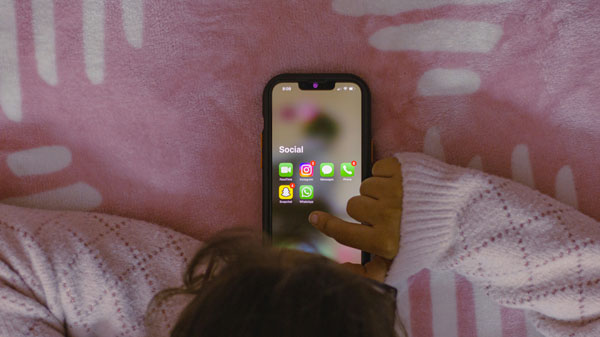
The folks at Defend Young Minds have released some new data telling us that social media is now the most common way that kids are exposed to porn. Six out of ten minors now say they were exposed to porn by accident on social media. This is up from almost four out of ten in 2023. Thirteen is the average age of first exposure, with reports of first exposure even at six years old. And the four most common social media sources for exposure are X, Snapchat, Instagram, and TikTok. The report also states that even if your kids are not searching for sexual content, the algorithms will deliver it to them. Defend Young Minds tells us that the best way to protect your kids from pornography, predators, and other harmful content is to, in their words, delay, delay, and delay your kids access to social media. In addition, we need to teach our kids that pornography is a form of sexual immorality, which takes God’s good design for sex, and destroys it through encouragement to sin.

Researchers found that with 11-15 year old youth baseball, there were an average of 5.2 negative adult spectator behaviors per game.
(University of Hawaii)
Research following US adolescents aged 11–12 shows that problematic use of mobile phones, social media, and video games was associated with higher risks of mental health problems, sleep disturbance, and suicidal behaviors one year later.
(American Journal of Preventive Medicine)

ORIGINAL STREAMING PROGRAMS of 2025
Source:
Nielsen Streaming Content Ratings
12/30/2024-12/28/2025
1. Stranger Things (Netflix)
2. Squid Game (Netflix)
3. Wednesday (Netflix)
4. Landman (Paramount+)
5. Reacher (Prime Video)
6. Ginny & Georgia (Netflix)
7. Love Island USA (Peacock)
8. The Night Agent (Netflix)
9. Love Is Blind (Netflix)
10. Gabby’s Dollhouse (Netflix/Prime Video)


SERMONS: FAMILY FOLLOW-UP
by WALT MUELLER
One of the most effective ways to get our kids to look critically and Christianly through eyes of faith at their rapidly changing culture is to help them understand and apply the truths of God’s Word. In fact, this ranks right up there as job number one as we take on our responsibility to nurture our children and teens in the faith.
One particularly helpful practice is to sit together in church in order to listen to the Word of God preached in the sermon. The practice of taking notes is one we should both model and teach to our kids. Then, each and every week, use the drive home or a time together later in the day to ask a question or two of everyone in the family. Here are some basic questions to get you started:
- What’s one new thing you learned about Jesus or God?
- What was the big idea that the pastor was communicating?
- Was there anything you didn’t understand or found confusing?
- What does what we heard in the sermon mean for our lives?
Do your kids a favor, and help them to listen, learn, and apply.

““Love the Lord your God with all your heart and with all your soul and with all your mind and with all your strength. . . Love your neighbor as yourself.”
Mark 12:30&31
Many well-intentioned parents work hard to give their kids the “good life.” Believing love means giving them all the things they never had themselves, parents shower their kids with cars, money, special classes, trips, and activities. The negative results of being handed the good life can be seen in the values, attitudes, and behaviors of today’s teenagers and young adults. Their values become very shallow and self-serving. What’s in it for me? they wonder. They grow up with no clue as to what the real world is like, nor how to live in that world in a God-honoring way. They lack resilience and find it difficult to function as a healthy and well-adjusted adult.
What are the options for those of us who realize that it is dangerous to give our kids the “good life”? The good news is that there is something better. In fact, it’s the “best life.” Our lives and actions should communicate to our kids that the best life is found in living in relationship with God by God’s will and way, according to his standards of success.
Jesus defined the “best life” during a conversation with a teacher of the law that’s recorded in Mark 12, starting in verse 28. Jesus said that the best life consists of directing all that we have, do, and are towards loving God in every nook, cranny, and minute of our lives. And then, because of our love for him, we should love those around us rather than treating them as competition or the means to material ends.
John Wesley had these priorities in mind when he gave this timely and timeless advice: “Work as hard as you can, to make all the money you can, to save as much as you can in order to give away all that you can.”



Youth Culture Today with Walt Mueller is a one-minute daily radio show and podcast from CPYU.
A NEW SHOW IS POSTED EVERY WEEKDAY!


God Breathed: Connecting through Scripture to God, Others, the Natural World, and Yourself by Rut Etheridge III reaches young adults wrestling through profound issues—identity, sexuality, suicidality, human rights, and creation care. Thoughtful, heart-to-heart exploration of Scripture’s lifegiving truth on these topics and more makes it ideal for high school and college students and those who love and serve them.
Self-made truth is the air we breathe in our day, which past philosophers hailed as the Age of the Lonely Self. You feel it when the silence falls around you and the whispers start within you: that growing, gnawing isolation, that deepening detachment from the world, from others, from yourself. God Breathed will help you understand and courageously doubt the popular dogma that God cannot speak, that the Bible is not only inaccurate but impossible. It will help you break out of the soul-suffocating confines of self-made truth. Within the pages of God’s book is the true you, just waiting for you to arrive. God Breathed will help you get there.

© 2026 All rights reserved. The CPYU Parent Page is published monthly by the Center for Parent/Youth Understanding, a nonprofit organization committed to building strong families by serving to bridge the cultural-generational gap between parents and teenagers.