



Main Article: The Rainbow and Pride
Hot Quote: Olivia Rodrigo
From the News: Loneliness and AI Companionship
Trends: New Dating Terms
Latest Research: The 2-Ton Responsibility
Quick Stats
Top Ten: Companies with the Largest National TV Advertising Spend
Helpful Insight: 3 Postures Toward Youth Culture
From the Word
Podcast
Resources
Download the PDF
“When we cave into our pride, we believe that everyone can and should be able to choose to live as whoever and whatever they want to be.”

“Look at that! It’s a double!” My daughter texted those words along with a picture she captured from her front porch. Two multi-colored arches, one above the other, reached across the cloudy sky after a recent rain storm. Like me, she’s never gotten over the excitement of looking up to see the beauty of a rainbow.
During this month of June, we’ll be seeing lots of rainbows. From social media posts, to product packaging, to advertisements, to yard signs in front of businesses and homes, to just about everywhere and anywhere else, what’s now known as “Pride Month” is a time when the rainbow colors will be used as a widely recognized symbol of LGBTQ+ identity and pride. We’re sure to encounter dozens if not hundreds of rainbow flags, which is the symbol of lesbian, gay, bisexual, transgender, and queer pride. The multiple colors have been adopted to reflect the diversity and spectrum of human sexuality and gender.
For those of us who seek to teach our kids God’s grand and glorious design for sexuality and gender, the rainbows we encounter during Pride Month might be seen as a challenge to our efforts to lead our kids into an understanding of God’s will for sex and gender. But instead of seeing Pride Month and these encounters as a challenge, why not seize them as a parenting opportunity? We can begin by teaching our kids about the origin and meaning of the rainbow.
The story of the rainbow begins in Genesis 6, as God sees that the human beings he created are so enmeshed in pursuing sin and evil that he feels sorrow over creating humanity in the first place. This sin of God’s people has its roots in pride, which was the original sin of Satan, the rebellious angel who was cast out of God’s presence due to his desire to become self-sufficient, believing that he knew better than God. When Satan tempted our first parents, Adam and Eve, in the Garden of Eden, he encouraged them to entertain and indulge their pride. He encouraged them to actually be like God.
Pride was the root and essence of the first sin, and it continues to mark the sinful and rebellious leanings of us all. When we cave into our pride, we believe that everyone can and should be able to choose to live as whoever and whatever they want to be. We believe that self rather than God is sovereign. Pride undid humanity, and it continues to undo us today. Humility and dependence on God is what the Christian is to pursue. As Jesus said, following him is only possible when we turn from pride and deny ourselves (Luke 9:23).
In the story of Noah, a righteous man who walked blamelessly with God, we see God’s grief over humankind’s sin. And while God chooses to cleanse the earth through a flood, he also chooses to make a covenant with humanity to never again destroy the earth through a flood. The mark of this gracious promise is the rainbow. As a sign of God’s promise of grace, the rainbow should point us to exhibit a response of humble gratitude marked by obedience to God’s will and way for our lives, rather than a pride-filled life where we follow our own will and way for our lives. In today’s world, the image of the rainbow is used as a symbol of pride. Sadly, this steals the rainbow away from what it was originally established to symbolize. Whenever you see the rainbow. . . in the sky, on a flag, wherever. . . don’t think of it as a sign of pride and human autonomy, but as a sign of humility and dependence on God who has offered up his own son to redeem us from our sin and pride.
Download CPYU’s handout, God’s Plan for Sex and Gender: 10 Teaching Points for Home and Church, by visiting www.cpyu.org/10points.


“Being fully covered up in a dress that people deemed ‘childlike’ was considered inappropriate. It just shows how we really normalize pedophilia in our culture and also it’s just this rhetoric that we’re fed as girls since we’re so little, which is like, ‘Don’t wear that, because then a man is going to sexualize your body, and it’s your fault.’ It’s so weird.”

Olivia Rodrigo
Olivia Rodrigo, talking about controversy that followed after she wore a babydoll style dress at a performance, The New York Times “Popcast” episode, May 28, 2026.

LONELINESS AND AI COMPANIONSHIP
Many youth workers are reporting that kids in their youth groups are experiencing increased loneliness.
The data supports this growing widespread epidemic of loneliness. God has made us for relationships, and when the pressures of life, the breakdown of the family, over-scheduling, and increased time focused on screens combine, it’s a perfect storm resulting in feeling alone. Sadly, Common Sense Media reports that 3 in 4 teenagers are now using AI for companionship. And, in an effort to find emotional and mental health support, many are relying on non-human chatbots to counsel and guide them through their struggles. Common Sense Media has issued this stern warning: “Teens should not use AI chatbots for mental health or emotional support. AI chatbots are not safe and reliable for these purposes.” Parents, our kids need real flesh and blood relationships, starting with you. That is the first step in stemming the tide of teen loneliness.

TRENDS:
New Dating Terms
It seems as though children are entering into dating relationships at younger and younger ages. Dating at this age comes with the inevitable breakup and period of sadness. However, elementary grade students dating at younger ages isn’t the only change happening in the world of kids and their dating relationships. Not only are kids dating younger and then marrying older, but there’s a whole new set of slang terms that we older folks need to know if we are going to keep up with the kids. If you hear your kids talking about “throning”, they are referring to efforts to date someone based on how that someone will raise their social status by giving their own image a boost. “Shrekking” involves dating someone you’re not attracted to, hoping that dating down in the looks department will lead to better treatment from the person. And “monkey-barring” has you holding on to one partner until you have moved on to the next. So parents, now you know!

LATEST RESEARCH:
The 2-Ton Responsibility
Parents, are you keeping an eye on your teenagers who are now driving? Recent research from the University of Michigan’s C.S. Mott Hospital polled parents on the driving behaviors of their kids, and found that risky driving behaviors are quite common. 17% of parents have observed their kids engaging in what’s called impaired driving, which includes driving while sleepy, emotionally upset, or after drinking alcohol or using marijuana. 25% of parents have observed their kids engage in distracted driving, which includes texting and multi-tasking. This would include those who put on makeup while driving. Finally, 44% of parents have observed their kids engaging in what’s called aggressive driving, which includes speeding, tail-gating, and road rage. Parents, we encourage you to not only monitor your kids and how they drive so that you can intervene when necessary, but to also teach your kids that as with all things, they are to drive to the glory of God.

Technology has overtaken homework and chores as the #1 source of parent-child arguments, with 28% of parents citing it as their top conflict trigger. Nine in 10 parents argue with their kids over screen time, and half say these disputes happen at least weekly.
(Talker Research via StudyFinds)
In April 2026, 5.19 million teens ages 16 to 19 were employed nationwide, down from 5.48 million during the same month last year. Last year’s teen hiring increase during April-July (when teens are traditionally hired for seasonal summer jobs) was the smallest teen summer hiring increase since 1948.
(Bureau of Labor Statistics)

COMPANIES WITH THE LARGEST NATIONAL TV ADVERTISING SPEND
Source:
Nielsen Ad Intel
Month of January 2026
1. Abbvie Inc
2. Verizon Communications Inc
3. Johnson & Johnson
4. Honda Motor Co Ltd
5. Fox Corp
6. General Motors Co
7. Berkshire Hathaway Inc
8. Yum! Brands Inc
9. Intuit Inc
10. Roark Capital Group Inc


3 POSTURES TOWARD YOUTH CULTURE
by WALT MUELLER
As a parent, what is your posture regarding how your kids will best navigate today’s youth culture? I want to warn you against two dangerous postures.
Some parents take the approach I call false optimism. It’s an approach that looks at the world and with a shrug of the shoulders says, “No need to worry. Everything is going to be alright.” Truth is, the collective lot of children and teens hasn’t gotten any better. False optimism leads to forfeited influence because there’s nothing anyone needs to do.
Another dangerous posture is what I call alarmist pessimism, which looks at the world and says, “It’s so bad and so far gone that nobody can do anything about it.” Not only does this view belittle God, but it too forfeits parental influence because there’s nothing anyone can do.
I would like to encourage you to take the approach of biblical realism, as you seek to accurately understand the cultural forces out there, so that you can responsibly lead your kids into navigating all of life to God’s glory.

“Have you not read that he who created them from the beginning made them male and female, and said, ‘Therefore a man shall leave his father and his mother and hold fast to his wife, and the two shall become one flesh’?”
Matthew 19:4&5
While the world around us can get the gender message right from time to time, the culture is sliding quickly into accepting and teaching a gender message that gets it wrong. More and more people are choosing to believe that its ok and normal to adopt a gender identity based on how they feel inside. You could feel like you are male, female, some combination of both, or actually neither. For some, gender falls on a spectrum that can even change from time to time. People now believe that your gender identity has nothing to do with the sexual organs with which you were born. Your gender is not biologically determined. But is this really true?
As followers of Jesus, we must go to and trust God’s Word as the spotlight that shines truth on our understanding of gender. God, the Creator of all things, pronounced everything He created as “good!” But when He finished creating humans He said “very good!” And what He pronounced as “very good!” was male and female. . . the binary genders He designed and assigned. . . male and female only, that are both fully human and equal in dignity and value. This is the way things are supposed to be. Jesus affirms this in Matthew 19:4 when He says, “Have you not read that He who created them from the beginning made them male and female?”
God desires that we never allow our feelings to dictate and misshape our understanding of truth. Rather, we need to submit our feelings and desires to God’s Word. Satan, the wrecker of this world, is on a mission to derail us from hearing God’s Word and living God’s way. Just like he did with our first parents (see Genesis 3:1-7), he whispers continually in our ears the doubt-inducing question, “Did God really say. . . ?” Don’t ever forget, God in His goodness has created and given us each our gender, which is indicated by our anatomy, either male or female.



Youth Culture Today with Walt Mueller is a one-minute daily radio show and podcast from CPYU.
A NEW SHOW IS POSTED EVERY WEEKDAY!

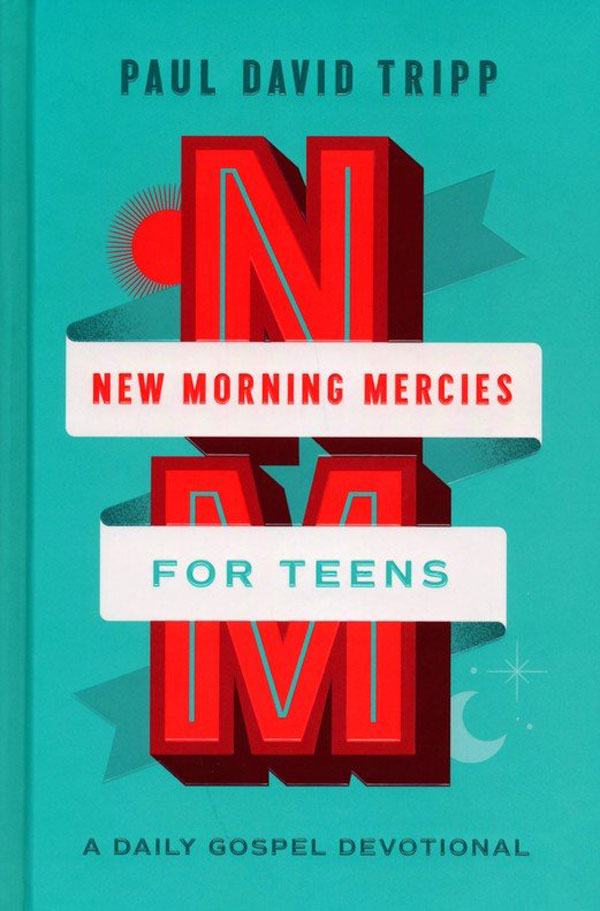
Paul David Tripp’s Bestselling Daily Devotional New Morning Mercies, Adapted for Teenagers.
Teenagers today face unprecedented and complex challenges in their lives and relationships. Parents and youth leaders can offer valuable Christian guidance, but it’s in Scripture that we encounter the wisdom of Jesus, new and sufficient for that day’s difficulty and temptation.
New Morning Mercies For Teens: A Daily Gospel Devotional, is an updated edition of Paul David Tripp’s bestselling book New Morning Mercies and features 366 engaging daily devotionals, adapted for teenagers. Each day includes a one-sentence, gospel-centered reading and an extended meditation, Bible verses, and a prompt for discussion or personal reflection. Tripp also includes a bonus Q&A chapter in which he briefly answers questions around relevant topics including anxiety, gender, social media, and spiritual disciplines. Focused less on behavior modification and more on helping teenagers encounter the living God, this book helps young people to fall in love with Jesus, find freedom and joy within his boundaries, and live for his glory—day in and day out.
A Great Gift for High School and College Students!

© 2026 All rights reserved. The CPYU Parent Page is published monthly by the Center for Parent/Youth Understanding, a nonprofit organization committed to building strong families by serving to bridge the cultural-generational gap between parents and teenagers.