



“Teach your kids to lean into God’s grace and provision as they put on the ‘new self.’”

She didn’t steal my heart, but chart-topping 27-year-old country singer Ella Langley stole my ears and my attention this past summer with a song that captures the reality of a pressure we all feel from time-to-time. It’s that pressure from without that fuels an all-consuming fight within. The chart-topping performer’s tune, “Be Her”, confesses that longing we have sometimes (or all-the-time?) to be someone else. . . someone who we don’t think we already are. I’ve felt it. You’ve felt it. And, our kids certainly feel it as they desperately seek to answer the question, “Who am I?”
In today’s world, the negative cultural narrative on identity that pounds our kids, convinces them, and is destroying them, is the one that Ella Langley has believed. Yet, watching the object of her song (“she” and “her”) leaves her yearning to escape from that all-consuming negative cultural narrative that’s all about presenting a desired self, keeping up appearances, and basically living into who our social media world wants us to be as opposed to who we’ve been created to be. Whether she knows it or not, Ella Langley, like all of us, is crying out to be who she was created to be. Among other things, Langley’s positive role model is living a life marked by moderation, integrity, commitment to her spouse and children, faith in Jesus, truth-telling, and being satisfied with what she has. That’s what Langley desperately wants as she sings, “I just wanna be her so bad, it hurts so bad. . . Don’t want all this drama, give me something real/Trade a mile high to walk one in her heels/Take all my money, everything I have/I just wanna be her so bad.”
If we take seriously God’s call on our lives to raise our children in the discipline and instruction of the Lord, one of our primary responsibilities is to help them find their identity in who they are as Divine image-bearers who also, when they come to faith in Jesus Christ, are adopted sons and daughters of God. What could be better and more freeing than that? But even for our kids who do come to faith, navigating the identity question in today’s negative world is a difficult venture.
While Ella Langley leaves listeners wondering if she will shed the shackles of that old self in order to embrace an identity and lifestyle of the “her” she yearns to be, we need to help our kids see and embrace the life-giving and freeing “What now?” identity path God has laid out for those who have come to faith in Jesus Christ. In his letter to the Colossians, the Apostle Paul helps us see what it means to live out what it means to “have been raised with Christ” and now united to Him by faith (Colossians 3:1-17). In essence, this is what we need to long for consistently and live out daily by God’s grace and help. This is who we need to be. So, how do we help our kids live into this way of living?
First, teach your kids to “seek the things that are above” and to “set their minds on things that are above.” Paul says this upward looking requires that we take our attention and allegiance away from the “things that are on earth.” We have died to those earthly agendas, commitments, idols, and identities. Instead, we need to refocus all of our faculties on looking for and thinking about God’s will and way for our lives. Parents, we can begin by reading and studying Scripture together in our homes, and then teaching them to read, study, and meditate on the Bible themselves. God’s Word will set them straight as they learn to discern Truth from lies.
Second, teach your kids to “put to death therefore what is earthly” inside themselves. This is a life-long process rather than a once-and-done step. As followers of Jesus who still struggle with our sin natures, our kids need to know that they will battle with sexual immorality, impure/immoral behavior, passion (lust), evil desires, and selfish greed. In addition, Paul piles even more on that garbage heap of things we’re to “put away” or “rid ourselves” of. . . a host of things that come from our lips including anger, rage, malice, slander, filthy talk, and lies. Parents, this requires us to confess and address our struggles with our sinful selves, modeling a lifestyle of struggling to rid ourselves of these things, and graciously help our kids see and address each of these “old self” sinful tendencies when they rear their ugly heads in their lives. In essence, we are to walk with our kids as fellow strugglers and pilgrims in the faith.
Finally, teach your kids to lean into God’s grace and provision as they put on the “new self.” As God helps us to shed our old selves, He calls us to live into a new identity that is marked by compassion, kindness, humility, meekness, patience, forgiveness of one another, and love. Again, living into this reality is a life-long process and struggle. But it is what our Savior has called us to, and He will do this good work in our children as they mature in their faith. Parents, our role, once again, is to model and teach this identity-transforming new way of life!
Listening to Ella Langley’s “Be Her” brings to mind the old nursery rhyme about Humpty Dumpty, that fragile egg who tumbled off the wall and was irretrievably broken. Following the cultural narrative on identity sends us tumbling, shattering us if we believe it and embrace it. But the good news is that we are not irreparable. Rather, in His grace, kindness, mercy, and love, our King – the Lord Jesus Christ – makes us new. We don’t have to only long like Langley to become something new. We can in effect ‘be Him’ as He transforms us into His image and identity… which is what we all long for in the first place!


“Teens aged 16 to 19 have a higher crash risk than any other age group of drivers. Inexperience can lead teens to overestimate their driving abilities and think nothing bad could happen. Unfortunately, this isn’t the reality and in fact, road crashes are a leading cause of death for young people. [While] safety messages about other risks have been understood by the majority of young drivers who have changed their behavior, there’s still work to be done to increase awareness about distraction-related risks.”
Robyn Robertson
Robyn Robertson, National Distracted Driving Coalition Chair and President & CEO of the Traffic Injury Research Foundation, Newsfilecorp.com, April 17, 2025.

THE NEED FOR PARENTAL AUTHORITY
Becky Kennedy and Sheryl Ziegler are both psychologists who are raising teenagers themselves.
They recently wrote a piece for CNBC’s online site with the eye-catching title: “If you want to raise stronger, more independent kids, give them this: They need it now more than ever say psychologists.” Kennedy and Ziegler cite how many parents today are so filled with the fear of doing something wrong, that they try not to push too hard or enforce too many rules, assuming that doing so might push their kids into stress, anxiety, and a host of other mental health issues. But the two tell us that this is NOT what our kids need. Rather, what our kids need is for us to boldy claim – and in some cases reclaim – our parental authority. They say that now more than ever they need us to offer up a safe system, a structure where we are in control. As Christian parents, we know from reading Scripture that this is our responsibility. But are we exercising our God-given authority?

TRENDS:
Precocious Love
The word “precocious” comes from the Latin word that is translated as “to ripen before.” In our day and age, the word “precocious” is used to describe something that develops early or before the usual time. We often pair “precocious” with the word “puberty” to describe the process of physical maturation in children long before the average age of onset. Now, the word “precocious” is being coupled with the word “love”, with “precocious love” referring to the intense romantic, emotional, and deep attachments kids are forming during their childhood and before adolescence. With research showing that dating breakups among teenagers lead to a greater incidence of suicidal thoughts and actions, we must be concerned for our younger kids who are at an even greater risk if a so-called break-up occurs. We need to be diligent in teaching our kids to prioritize their relationship to the Lord first, knowing that only He can fill the relational hole that so many try to fill with a significant other.

LATEST RESEARCH:
Peer Influence
As our children enter the teenage years, more and more of their world begins to revolve around their peer group. While parents remain important and influential, our kids look increasingly to their peers for clues on what to believe, how to behave, and what to do in order to fit in. New research from Florida Atlantic University has found that different types of peers influence different aspects of a teenager’s life. There are two specific groups of peers exerting influence. Researchers found one’s best friends shape a child’s emotional state and academic behavior. They also found that the larger group of more popular peers exert an influence on how a child presents themselves in public and on social media. This reminds us that we need to be encouraging and making possible Godly friendships for our kids that are positive. A good youth group situation can become a positive peer group, where not only is God’s design for their lives taught, but practiced as well.

About 40% of 14-24 year-olds felt that people who hold beliefs or worldviews like theirs were accurately represented in the media. Around 70% of all religious respondents said the way their religion or spirituality is portrayed in the media affects how others treat them.
(The Future of Faith: Young People, Media, & Spirituality)
Over 60% of respondents from both religious
and non-religious groups said something they saw in the media has made them feel less comfortable or safe expressing their beliefs. About 55% from most religious groups said religious content they’ve seen online about beliefs or worldviews around religion has created conflict or tension between them and a family member, friend, or peer.
(The Future of Faith: Young People, Media, & Spirituality)

GROSSING MOVIES IN THE U.S. SO FAR IN 2026
As of August 31, 2026
Source:
Box Office Mojo
1. Spider-Man: Brand New Day
2. The Odyssey
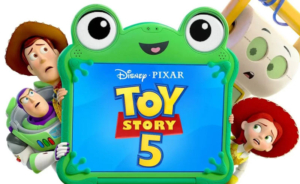
3. Toy Story 5
4. The Super Mario Galaxy Movie
5. Michael
6. Project Hail Mary
7. Obsession
8. The Devil Wears Prada 2
9. Backrooms
10. Minions & Monsters

SCREENTIME – GARBAGE IN?
by WALT MUELLER
Parents, think of the brains of your children and teens like you think about your email accounts. If you are like me, your email box is pounded with more junk, spam, scams, and phishing schemes than legitimate, trustworthy, and truthful communication. I hope that as we’ve become more experienced we’ve learned how to recognize, block, and delete all the garbage that floods our inboxes literally hour-by-hour.
Wisdom and discernment lead us to separate the good from the bad, saving us from wasting time, effort, money, and even our very lives on things that will undo us. To protect them from passively loading their brains with the bad stuff, we need to run interference for our kids by limiting and monitoring their screen-time. Further, we must fill their brains with the Truth that brings life and by which all things can be evaluated.
Train them to embrace and practice biblical wisdom and discernment. Equip them to live now and for the rest of their lives to the glory and honor of Jesus Christ!

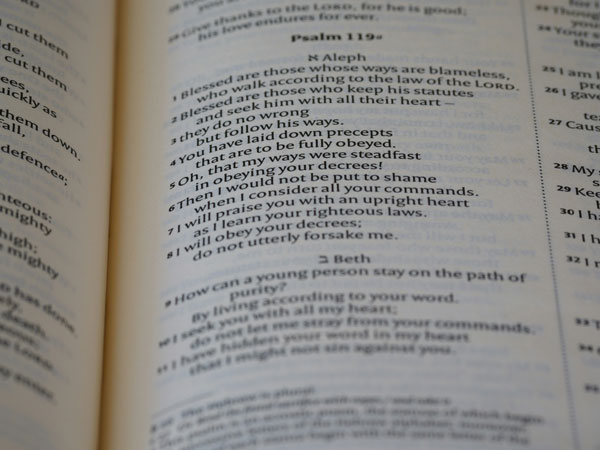
“You have charged us to keep your commandments carefully. Oh, that my actions would consistently reflect your decrees!”
Psalm 119:4&5
Sometimes Scripture is about Scripture. That’s the case in Psalm 119, the longest Psalm in the Bible. The Psalmist delights in God’s Word in ways that should inspire and prompt us to do the same. Because our families live in a world that tugs on our hearts and calls for us to place our allegiance in a variety of false gods, we must pursue the resolve the Psalmist shows in the Psalm’s opening verses.
The Psalmist recognizes that God calls us to a lifestyle characterized by an undivided heart. An undivided heart is one that relentlessly pursues deeper understanding of the truths of God’s word, believing them to be true. Then, the heart pursues a life of passionately and wisely living out those truths in every nook and cranny of life. It is a weaving together of one’s belief and one’s behavior. Our overwhelming desire in life should be to “keep your commandments carefully” (v.4) and to act in ways that “consistently reflect your decrees” (v.5).
Always remember – the way in which you live speaks louder than your words. Your teenagers are watching. Live as God has called you to live and your watching children will be given the gift of a clear example of what it means to do the same.


Youth Culture Today with Walt Mueller is a one-minute daily radio show and podcast from CPYU.
A NEW SHOW IS POSTED EVERY WEEKDAY!

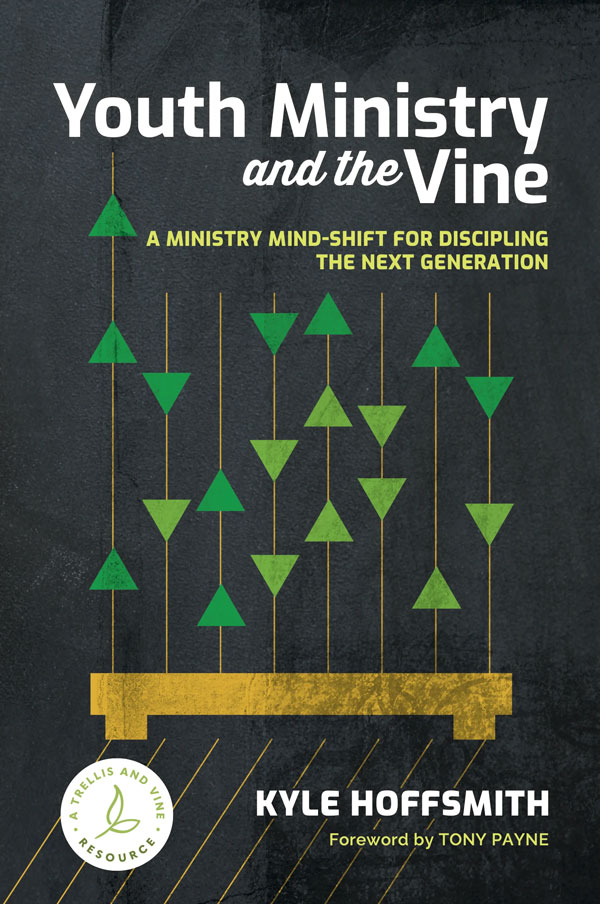
Do you want to build a youth ministry that lasts? Better yet, do you want to build young disciples of Jesus Christ who last—disciples who love the Lord, know the Bible, long to reach their friends, and are equipped to serve?
In Youth Ministry and the Vine: A Ministry Mind-Shift For Discipling The Next Generation, experienced pastor Kyle Hoffsmith helps you evaluate your ministry in light of the eternal truths of the gospel. Building on the internationally recognized ministry framework of The Trellis and the Vine, Hoffsmith shows how and why to stay focused on young people without losing sight of the programs and structures required.
Youth Ministry and the Vine focuses on growing young disciples who love Jesus, know the Bible, and long to reach others. The book applies the proven Trellis & Vine ministry framework while providing readers with practical insights, helping them gain a fresh vision for their ministry with renewed energy so they can discover how to build a thriving youth ministry focused on discipleship and lasting impact.

© 2026 All rights reserved. The CPYU Parent Page is published monthly by the Center for Parent/Youth Understanding, a nonprofit organization committed to building strong families by serving to bridge the cultural-generational gap between parents and teenagers.