



Main Article: The App Trap
Hot Quote: Isabella Gomez Sarmiento
From the News: Surveillance Pricing
Trends: Cosmetics Spending
Latest Research: Social Media and Cannabis Use
Quick Stats
Top Ten: Fastest Growing Brands
Helpful Insight: Sharing Vulnerability with Kids
From the Word
Podcast
Resources
Download the PDF
“As Christian parents, how can we help our kids avoid the addiction trap that can so quickly undermine their well-being?”
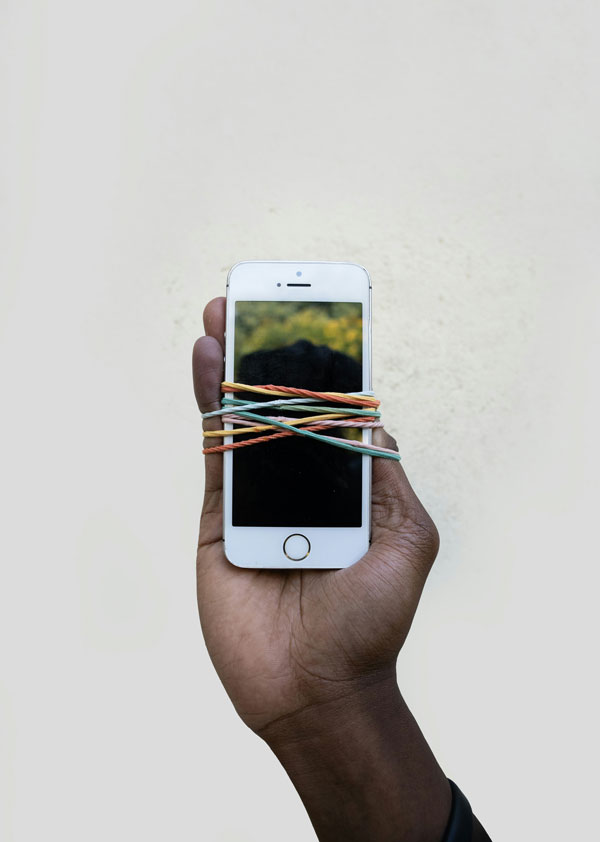
What was supposed to be a five-minute detour to use a truck stop restroom took much longer than expected for our group of college-aged friends headed south over winter break in the late 1970s. Our attention, time, and every quarter we had were captured by our discovery of a Coin Pusher. If you’re not familiar with this enticing machine, it features a moving metal shelf on which sit hundreds of quarters. Using a small slot, we poured in every quarter we had, one at time, hoping that each “investment” of 25 cents would land in a place that would push the pile forward, allowing several other quarters on the shelf’s edge to drop into the payout tray for our taking. Every single one of us begged “Just one more!” as the machine gripped our attention. In the end, we walked out of that truck stop as losers, having far less change than when we had entered.
In today’s world, the devices, apps, games, and social media combine to capture and hold our attention, time, and money 24/7. Do you lament the grip the digital world has on your kids? Like that Coin Pusher I encountered all those years ago, our devices and apps are designed to keep us engaged. . . always leading us to pursue that “Just one more!” We’re all susceptible to the ways these things – by design – spark the release of the neurotransmitter Dopamine, the pleasure chemical that keeps us craving and coming back for more. But it’s our kids whose brains, time, and relationships are being hijacked during this crucial age of brain formation and development. They might be the most vulnerable to the intentional use of psychological knowledge, behavioral science, and the biochemistry of the brain to influence human behavior and cause addiction. It’s called “persuasive design.”
In her book, Dopamine Kids, Dr. Michaeleen Doucleff pulls back the curtain to show how screens and apps are designed to capture and addict our kids. Doucleff cites the work of New York University Professor Natasha Dow Schull on how the same “get-em-hooked” tactics used by the gambling industry are used by the designers of devices, games, social media, and apps to hold our children’s attention as long as possible. Schull concludes that there is a recipe using four key ingredients that “produce the opposite of human flourishing.”
Ingredient #1: Solitude. Take advantage of the fact that the relationship is between an individual and their screen. By being isolated from others, the machine/app is able to draw you in because nobody is around to interrupt you. When our kids are alone in their rooms, it’s just them, the screen, and the algorithms that are tracking their every move.
Ingredient #2: Bottomless Nonclosure. Scroll, scroll, and keep on scrolling. Why? Because you’ll never get to the end of the TikToks, YouTube videos, or Instagram photos and reels. Schull says that when apps and games have no end point, they become more addictive. And once the algorithms know your kids, they’ll keep feeding them more of what it is that grabs and holds them.
Ingredient #3: Speed. By building in the ability to play and scroll at high-speed, developers know that kids will lose track of time and space, sending them spiraling down the rabbit hole.
Ingredient #4: Making Big Promises, Withholding the Reward. Ok. . . so that’s what sucked us in to that Coin Pusher. In today’s digital world, it’s not primarily the financial reward that’s being sought. Rather, it’s the craving to meet our most fundamental needs for acceptance, friendship, support, and belonging. Continually working to post, get the likes, accumulate the positive comments, go viral, get to the next level in a game, or unlock a special feature are the “quarters” our kids seek.
As Christian parents, how can we help our kids avoid the addiction trap that can so quickly undermine their well-being?
First, there are the immediate practical steps we must take to set time and age limits (no phones before the age of 16!). We can encourage developing hobbies. We can carve out family time and eat our meals together. We can turn off the notifications on our phones and take social media Sabbaths. And, we must encourage peer involvement with a church youth group.
Second, there are truths from God’s Word to teach and model day-by-day. Fight back against hermit-like solitude by helping them see that God has made us for relationships (Genesis 2:18, Ecclesiastes 4:9-12, Hebrews 10:24-25). Teach them that to steward and use their time wisely is an act of worship (Ephesians 5:15-16, Psalm 90:12, Proverbs 6:6-8). And finally, help them see that the true object of all their yearnings can only be answered by the Gospel as they come into a relationship with God through faith in Jesus Christ (Psalm 107:9, Psalm 42:1-2, Ecclesiastes 3:11, John 7:37-38).
Let’s pray that our kids realize now and for the rest of their lives, that the “just one more!” we are always hoping for will never come through a screen. Rather, only Jesus Christ can satisfy their deepest desires, and because salvation should not be sought and cannot be found in anyone else.


“I think on social media, the apps have become so, so important to success in the music [industry]. Music and audio is so native to an app like TikTok. It’s how new artists build buzz and get signed. It’s how they promote their music. It’s how this year at the Grammys, we saw that every single Best New Artist nominee was someone who had had a big song on TikTok the year before. It’s a real marker of success. And I think if it feels like music discovery on those platforms is fake, then that success is also, in a way, maybe not fake, but being engineered in a way that feels uncomfortable to people who have a real emotional attachment to the music.”

Isabella Gomez Sarmiento
Isabella Gomez Sarmiento, a reporter with NPR Music, speaking on Pop Culture Happy Hour about the hidden money that finances and promotes our favorite songs, September 7, 2026.

SURVEILLANCE PRICING
If it hasn’t yet happened to you, chances are very good that it will.
You learn that both you and another person purchased the same item at the same place at the same time, and yet the prices you paid were not the same. Surveillance pricing is the practice of using artificial intelligence technologies and consumer data collection to set individualized prices for goods and services. Also known as dynamic pricing, algorithmic pricing, and personalized pricing, companies change prices based on a persons browsing history, location, and device type. In addition, technology is being used to discover your willingness to pay, which is a strategy used to identify the highest possible price an individual will accept before abandoning the purchase. The reality is that these new marketing techniques are being used to sell to you and your kids. Parents, talk to your kids about these tactics and point them out when you see them. In addition, join the effort to enact legislation to end the practice.

TRENDS:
Cosmetics Spending
An interesting way to discover what is popular among teens is to pay attention to their spending habits. In today’s world, the top categories for teen spending are clothing and other accessories, food and snacks, entertainment and gaming, and experiences with friends, like concerts and other outings. Marketing’s push for the maintenance of youthful beauty has our girls spending lots of money on make-up, hair care, and skin care. But don’t count out our boys in this last category! Young Gen Z males are spending an average of $324/year on cosmetics, skin care, and fragrances. Because marketing effectively convinces our kids to spend, spend, and spend some more, we need to ramp up our efforts to teach biblical principles on stewardship. In I Timothy 6:17, we are reminded to not put our hope in wealth, but to put our hope in God. Teach your kids to spend wisely.

LATEST RESEARCH:
Social Media and Cannabis Use
As the years since the advent of social media have passed, we are learning more about the good, the bad, and the ugly related to this ever-present influence in the lives of our kids. New research from the University of South Queensland in Australia have found that teenagers who frequently use social media are 3x more likely to try cannabis than those who use social media occasionally. Published in the Journal of Substance Abuse and Addiction Treatment, the study links high social media use by teenagers with increased impulsivity and risk-taking, two aspects of teen life that already exist! These behaviors are both strongly associated with substance abuse experimentation. What do our kids encounter on social media? They encounter peer influence, trends, and other content that normalizes risk-taking and the use of substances. Parents, this is one more reminder of the fact that we need to peel our kids away from screens. Are you setting borders and boundaries?

Ella Langley’s hit song “Choosin’ Texas” has scored it’s 23rd week at #1 on the Billboard Hot 100 Chart, surpassing Mariah Carey’s “All I Want for Christmas Is You,” which sat at the top of the chart for 22 weeks, for the longest run ever.
(Billboard)
Despite an increase in schools implementing cell-phone bans, teens’ reported cellphone use in core classes has actually increased. In schools that had “bell-to-bell” bans, 25% of students reported using cellphones in October 2025, while the number had increased to 35% by May 2026.
(The Brookings Institution)

Fastest Growing
Brands of 2026
Source:
Morning Consult
1. Mr. Pibb
2. Jimmy Dean
3. Snickers
4. Gemini
5. Energizer
6. 7 Brew
7. Sweet Baby Ray’s
8. Domino’s
9. Listerine
10. Five Below


SHARING VULNERABILITY WITH KIDS
by WALT MUELLER
One of the most heart-breaking and difficult aspects of being a Christian parent who longs to see his kids embrace and mature in their own faith, is the rocky nature of adolescent faith. Much of their “wavering” is simply a part of the teenage territory and the process of adopting their family’s faith as their own. But maybe an even greater amount of that wavering is rooted in their humanness. . . a reality that we share with them.
Let’s face it – we are all sinful and fallen people whose lives – just like the lives of so many Biblical characters – have always been marked by periods of doubt, struggle, problems, and failures. The Bible is filled with stories of rebellious human beings who were called by God to be His people, but who often stubbornly followed their own will and way.
Becoming transparent with our kids about the presence of these realities in our own lives can be liberating for them. It not only allows them to see us in our full humanity and dependence on God, but it gives them permission to struggle, doubt, and sometimes fail.

“The thief comes only to steal and kill and destroy. I came that they may have life and have it abundantly.”
John 10:10
There’s a classic old 1970 rock song by The Moody Blues that captures a universal human reality that has existed since our first parents rebelled against God and fell into sin way back in the Garden of Eden. The song is titled “Question.” Because we know that all creation is groaning for redemption (Romans 8), we understand what the singer is ultimately longing for when he sings, I’m looking for someone to change my life/I’m looking for a miracle in my life.
In John 10:1-21, we read that Jesus is “The Good Shepherd.” Because we are like sheep who have gone astray, we need a shepherd who will give His very life in order to give us life and to protect us from all of those who come to steal, kill, and destroy. Jesus tells us that there are many thieves and robbers who want us to think that they can show us the way to have our deepest yearnings and groanings for redemption met. But the message is simple and clear: Jesus is the only way to experience the miracle of new life and a changed life! In fact, Jesus accomplishes our redemption by laying down his life for His sheep.
In a world filled with voices that come at us 24/7 through our devices and social media, all of us need to learn to distinguish between those who are only out to grab and keep our attention, and the Good Shepherd who speaks life-giving words of truth and grace. We must tune our ears, eyes, hearts, and minds away from the life-consuming distractions of our digital world, focusing them instead on God and His Word.


Youth Culture Today with Walt Mueller is a one-minute daily radio show and podcast from CPYU.
A NEW SHOW IS POSTED EVERY WEEKDAY!

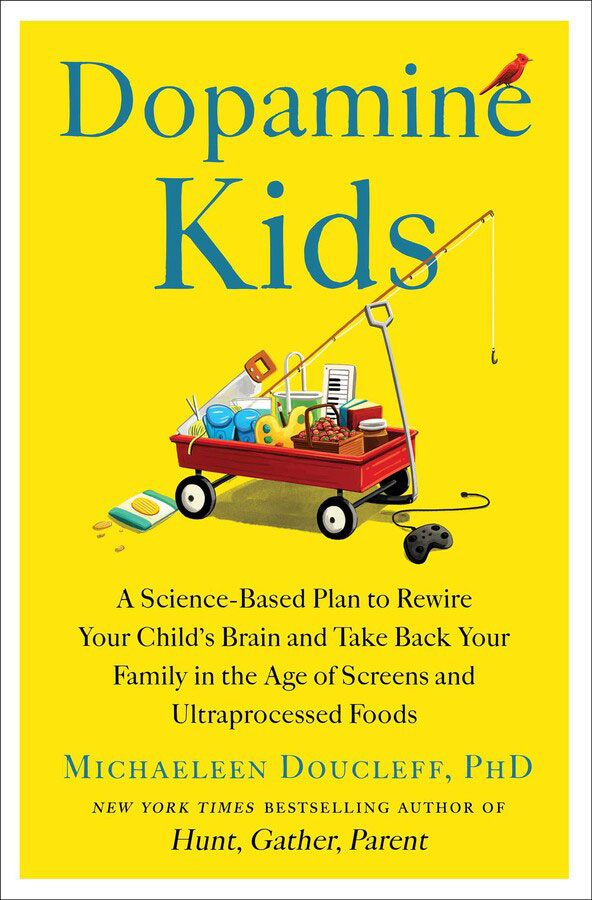
When Dr. Michaeleen Doucleff decided to address her family’s screen time and dependence on processed foods, she found that parenting advice around these products is woefully outdated, hinging on studies of dopamine that date back twenty to fifty years. But new research reveals that contrary to what we’ve been told, dopamine isn’t the molecule of happiness and pleasure. Instead, dopamine gives us motivation, and can drive us to engage in activities that we don’t actually enjoy—activities that can make us feel sad, lonely, anxious, and depressed.
What works, Doucleff found, isn’t depriving children of pleasure, but bringing more joy and pleasure back into their lives. Merging modern neuroscience and psychology with practical experience, Dopamine Kids is a five-step operating manual for habit remodeling that is tailored for parents and their children, shifting the power dynamic back to families. Instead of devices and foods controlling us, we can control them, retraining children’s brains so they want and reach for activities and foods that leave them feeling good afterward. You’ll learn how to:
– Create boundaries around screens and ultraprocessed foods that not only work but that kids enjoy;
– Replace screen time with equally enticing activities;
– Set up your routine, so that the healthy options become the default without negotiation or struggle;
– Celebrate your family’s choices before, during, and after trying new hobbies, and, finally,
– Transform your home into a screen-free sanctuary that protects conversations, focus, sleep, and adventure.
After reading Dopamine Kids, you will be empowered to create habits that genuinely fulfill your family’s biological and emotional needs, to bring true satisfaction and purpose to their lives, and to improve their behavior, happiness, and confidence. The Anxious Generation alerted you to the danger of screens, but the demands of the twenty-first century require that you use them anyway. Dopamine Kids is your handbook for solving that fundamental problem of our times—and for teaching your kids to have a healthy relationship with technology and food.

© 2026 All rights reserved. The CPYU Parent Page is published monthly by the Center for Parent/Youth Understanding, a nonprofit organization committed to building strong families by serving to bridge the cultural-generational gap between parents and teenagers.